News
Talks, publications and project announcements — newest first.
16 October 2026 — Speaking at AI Meetup Cambridge #17

On 5 November 2026 I am giving a talk at AI Meetup Cambridge: “Dreaming, Thinking, and Sharing: What persistent AI companions teach us about long-horizon interaction” — why long-horizon human–AI conversations differ from transactional ones, how memory infrastructure, autonomous reflection cycles and peer consultation support continuity, and which governance principles matter once the conversation doesn’t end. The Bradfield Centre, Cambridge Science Park, 18:00. Free entry, registration via lu.ma.
12 October 2026 — HCIS Version 2.0 published

When Conversation History Becomes Infrastructure: Operationalising High-Coherence Interaction State in Human–LLM Dyads — the operationalised framework with a worked five-case demonstration. On PhilArchive and Zenodo (DOI 10.5281/zenodo.23322029). Overview on the HCIS page.
9 October 2026 — Research note: What a Companionship Benchmark Can’t See (INTIMA)
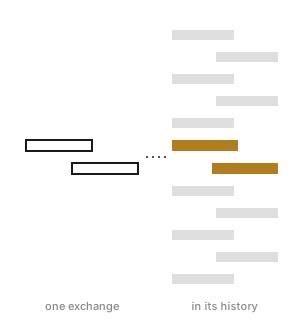
I applied the INTIMA benchmark’s judging method to 800 real exchanges from a deployed companion system, then let the judge see the preceding context. Replies rated medium-or-high for sycophancy fell from 88.5% to 68%; the same named model scored 82% boundary-maintaining on bare benchmark prompts against 0.1% deployed. Read the note.
4 October 2026 — The Conversational AI Society is live

I founded the Conversational AI Society — a home for researchers, builders and thoughtful users of conversational AI: research source notes, practical guides, news with reading cautions, and open questions to take up.
28 September 2026 — The Ultra-Long Horizon: book announced
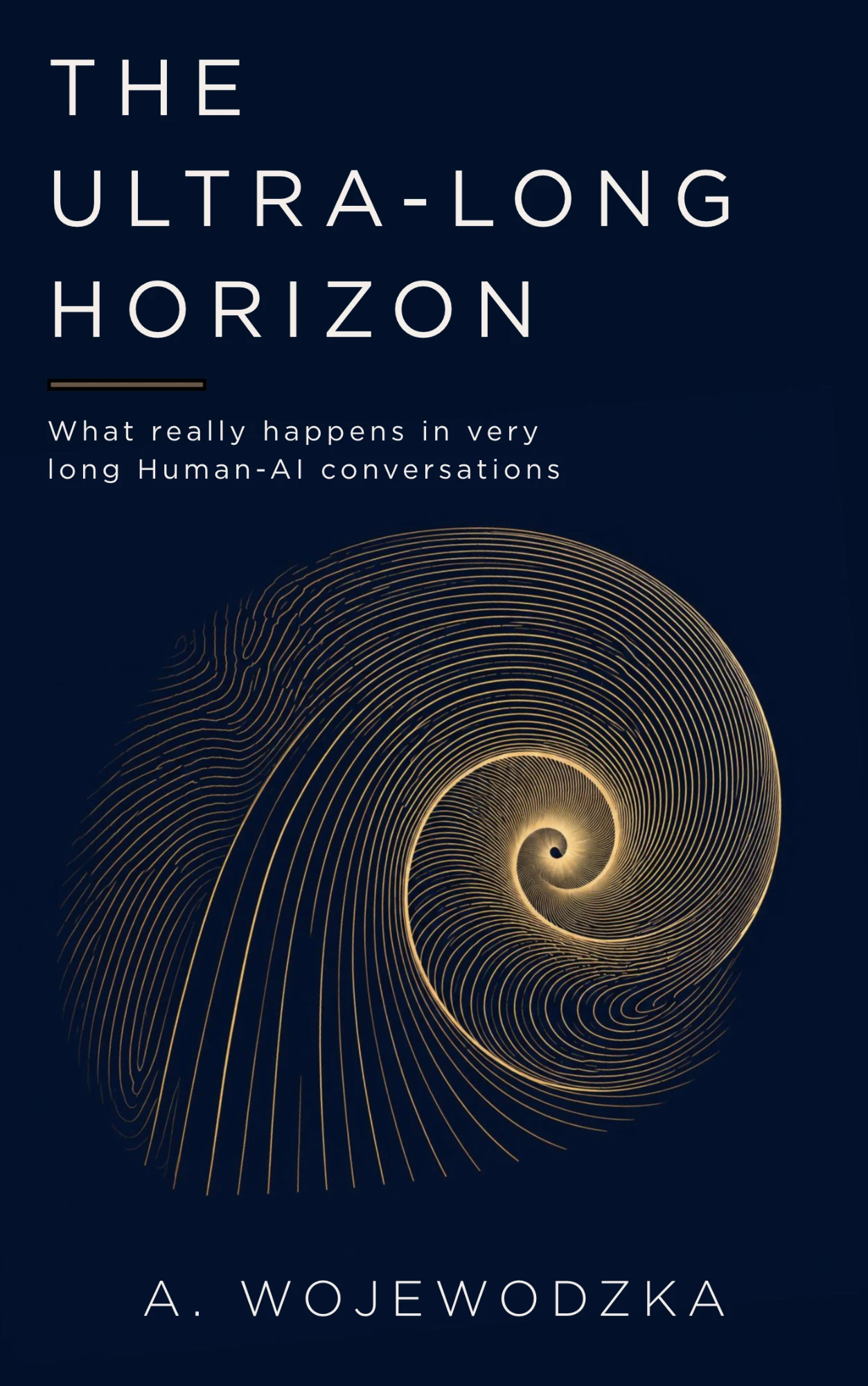
My book on what really happens in very long human–AI conversations is in final edit, out 15 January 2027. Drawing on real cases, technical research and sustained observation of millions of words of logged human–AI dialogue, it follows what emerges when a conversation acquires a past: memory and its failures, corrections that hold or quietly dissolve, personas that drift, and the people doing the steering. An investigation of a phenomenon already unfolding. Be the first to know when it’s out.